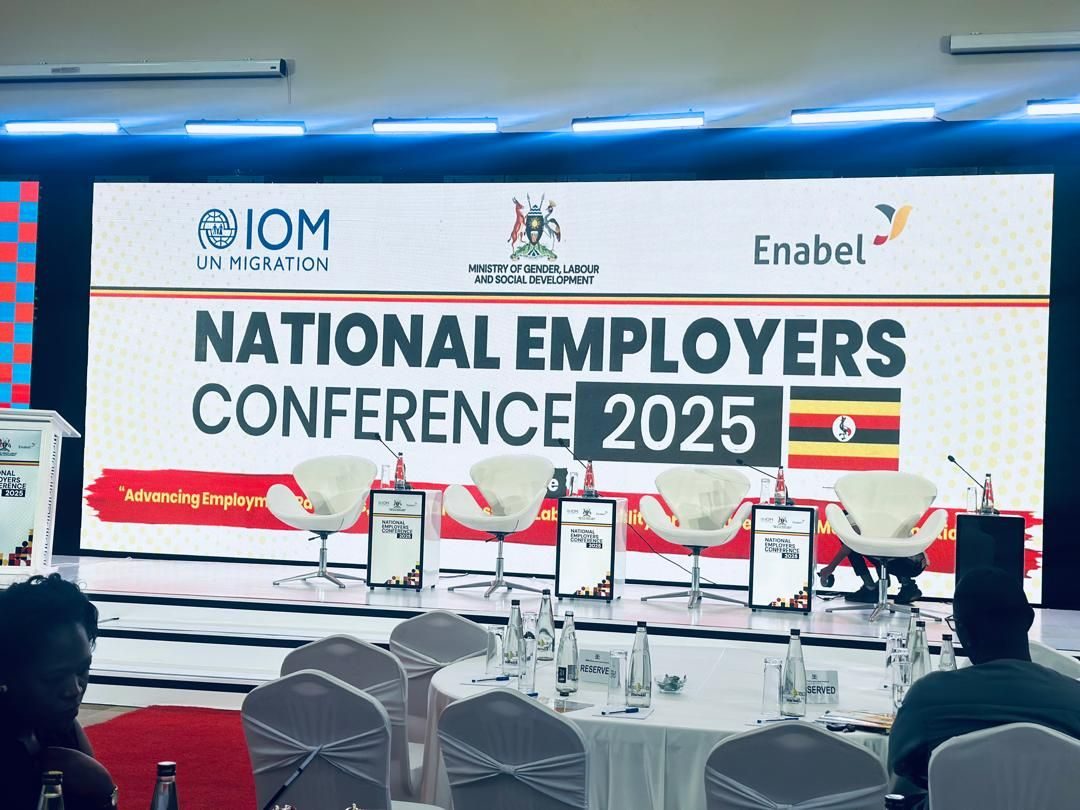

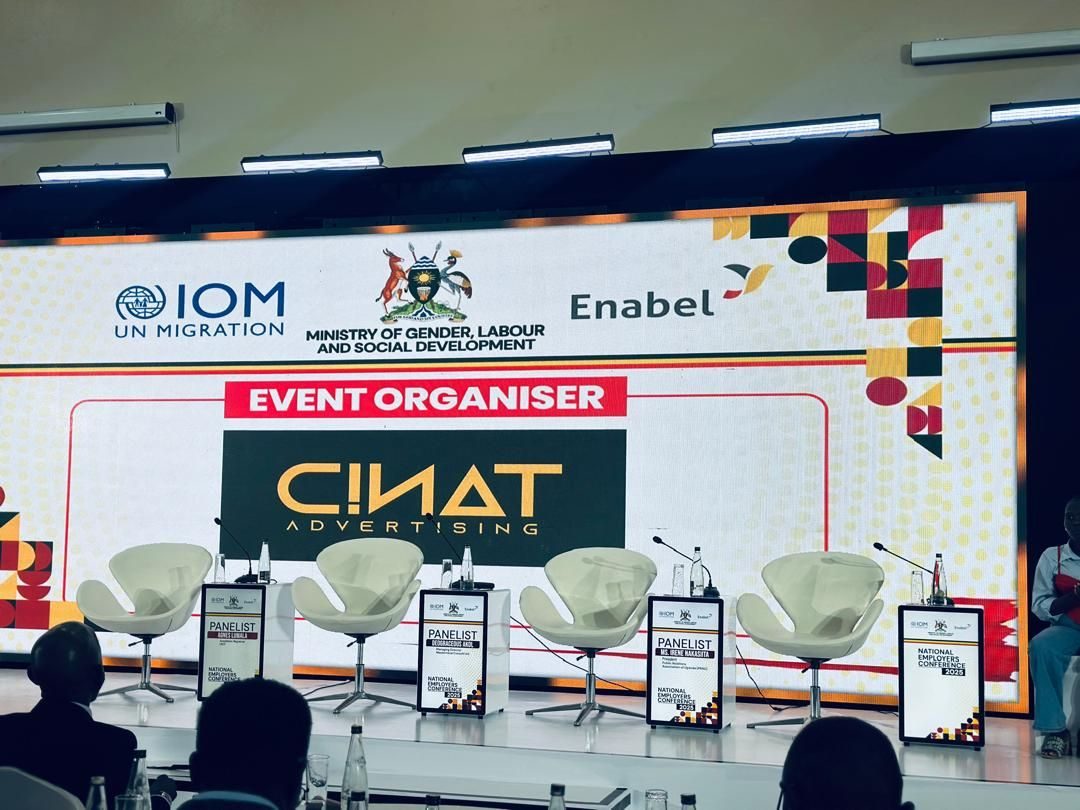
Most stories about major conferences start with bright lights, perfect staging, and a calm, polished opening. Ours started at 2:00 AM inside the Mestil Hotel hall with a room full of equipment, a client waiting for a flawless morning, and an entire CINAT production team preparing to transform the space before dawn.
We had been waiting for another event to end, watching the minutes fall off the clock, knowing the National Employers Conference 2025 hosted under the Ministry of Gender, Labour and Social Development was only hours away. No delays. No excuses. No second chances. When the last group finally exited, we moved in. Fast.
Trussing, lighting, staging, branding, sound checks, layout mapping all unfolding in a choreography of pressure, teamwork, and pure discipline. By the time the first delegates began walking in, the stage was standing tall, sharp, and ready. Not a single person could tell that it had been built in the quiet, frantic heartbeat of the night.
But the story of this event is bigger than staging. It was about the future of creative work and how CINAT Advertising sits right at the center of a global shift that is transforming. what agencies must be and who creatives must become. On that day, the conference room wasn't just filled with employers. It was filled with warnings, insights, and a roadmap for the professionals of tomorrow.
And none hit harder than the message shared by Solomon Serwanjja, investigative journalist and Executive Director of the African Institute for Investigative Journalism. He didn't mince words: "Employers are no longer looking for someone who can do one thing. Not a journalist who only anchors. Not a creative person who only edits. Not a communicator who only writes. They want complete professionals who can script, voice, edit, create digital content, tailor messaging for multiple platforms, problem-solve, and still deliver quality under impossible timelines. Because budgets are shrinking. Teams are leaner. And value now sits in versatility."
Serwanjja's warning echoed a global trend. According to a 2024 report by the World Economic Forum, over 50% of all employees will need reskilling by 2027, with creative industries facing some of the most dramatic shifts. The traditional silos of "writer," "designer," and "producer" are dissolving into a single hybrid role: the multidisciplinary creative.
This was the same truth reflected by Irene Nakasiita, MCIPR, President of the Public Relations Association of Uganda (PRAU). She reminded the room that Artificial Intelligence is not replacing communicators, it is challenging them. AI can generate output, but it cannot decide what is strategic. It cannot refine a message to fit context. It cannot understand nuance, brand DNA, or human emotion. As Nakasiita argued, the professionals who will thrive are those who use AI as a tool, not a crutch enhancing their creativity rather than outsourcing it.
Commissioner Alex Asiimwe posed the central question of the day: "How do we create more and better jobs in an era of automation and lean budgets?" The answer, he suggested, lies not in working harder, but in working smarter and in cultivating T-shaped professionals who have deep expertise in one area but broad competence in many.
And that is where CINAT Advertising fits in. While these conversations were happening on stage, we were living them behind the scenes literally and philosophically. Because what does it mean to be a "complete" agency in 2025? It means doing what we did that night. It means creating a physical environment that communicates professionalism, excellence, and intention under pressure, without sleep, and with precision.
It means bringing together teams who can handle stage setup, technical production, content creation, digital communication, client coordination, and visual storytelling all seamlessly, all at once, all with quality that doesn't depend on perfect conditions. It means refusing to operate in silos. One brief, one team, many competencies.
The very message the conference delivered about the future of work was the message our work demonstrated in real time. Creativity is not an isolated skill anymore. It is a hybrid occupation, strengthened by versatility, powered by collaboration, and elevated by technology not replaced by it. And that is the heart of the story: The future of creative work belongs to those who can adapt, integrate, collaborate, and deliver under pressure whether they are on the stage or behind it.
As the industry continues to evolve based on data from LinkedIn's 2025 Workplace Learning Report, one question remains: Are agencies truly preparing their teams for this new era of multi-skilled, tech-supported creativity, or are they waiting for talent that no longer exists? At CINAT Group Ltd, we already know where we stand. And at 2:00 AM, in a quiet hotel hall, we proved it.