
Uganda’s export story is often told in numbers: trade deficits, freight costs, border delays, and the persistent struggle of MSMEs trying to break into regional and global markets. But behind those numbers lies a more important question; what does it take to actually move from conversation to coordinated national action?
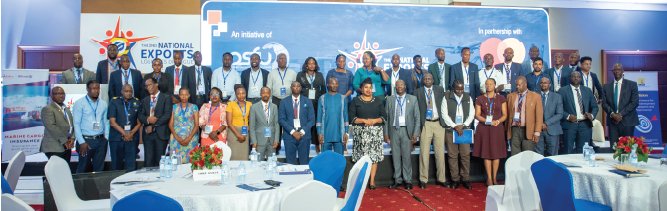
In 2023, that question took shape through the National Export Logistics Dialogue, a convening of policymakers, exporters, financial institutions, logistics operators, and development partners, all gathered around one shared urgency: fixing the systems that move Uganda’s goods.
At the center of that convening was CINAT Group Ltd. Not as a spectator. Not as a vendor. But as the architecture behind the experience.
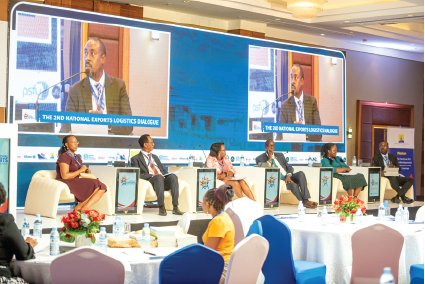
CINAT was entrusted with full event orchestration from concept translation to physical execution. Branding systems, spatial design, stage architecture, digital amplification, guest flow, and the overall production direction were all engineered to ensure one thing: that Uganda’s export conversation did not feel like a meeting, but like a national turning point.
Because in high-level policy environments, space is not neutral. It either weakens or strengthens the message. And for a dialogue addressing export bottlenecks, logistics fragmentation, and MSME financing gaps, the environment had to communicate urgency, structure, and credibility before a single word was spoken.
Long before delegates arrived, the CINAT production team was already on ground shaping that environment, translating economic policy ambition into a physical experience that could hold it.
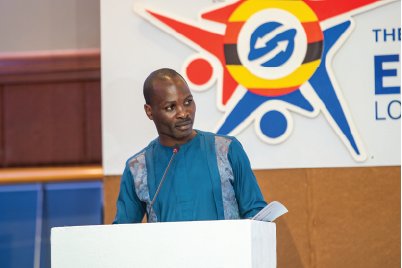
When the Dialogue opened, it became clear that the real work was not just in presentation, it was in alignment. Exporters spoke about cold-chain limitations, inconsistent freight pricing, and financing barriers. Banks responded with risk frameworks and export credit structures. Government institutions unpacked reforms under national development strategies. Development partners provided regional trade insight and technical context.
For the first time in many such conversations, the room did not feel divided. It felt synchronized. And that synchronization is often invisible but it is engineered.
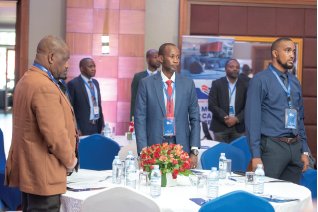
CINAT’s role extended beyond the venue. In the lead-up to the Dialogue, digital communication strategies were deployed to frame the national conversation, build awareness, and ensure that stakeholders arrived not just informed, but engaged. The objective was simple: no passive attendance, only active participation.
By the end of the Dialogue, what remained was not just discussion, but directional clarity, early frameworks for more coordinated export logistics thinking, and a shared recognition that Uganda’s competitiveness will not be solved in isolation, but in systems.
For CINAT Group Ltd, this was not just an event execution milestone. It was proof of something larger that modern creative and communication firms are no longer peripheral to national development conversations. They are part of the infrastructure that makes those conversations possible, visible, and effective. Because when nations gather to solve complex problems, the space, structure, and storytelling around those conversations matter just as much as the agenda itself. And that is where CINAT operates best at the intersection of clarity, execution, and impact.